The EvalScribe Teacher Evaluation Blog — AI, Frameworks, & Observation Tips
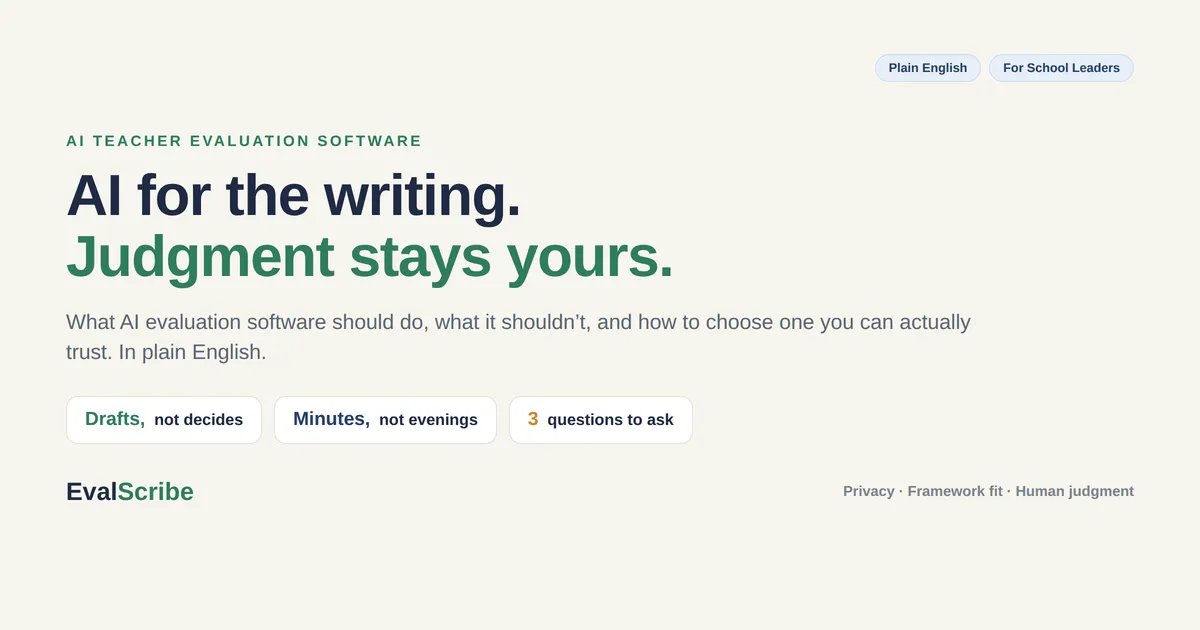
AI Teacher Evaluation Software, Explained
 by: Anthony D. Neely, Ph.D.Published on: 23/09/2026
What AI teacher evaluation software is and what it should and shouldn't do: how it drafts rubric-aligned write-ups in minutes while the evaluator keeps the judgment, the privacy and defensibility questions to ask, and how to choose the right tool.
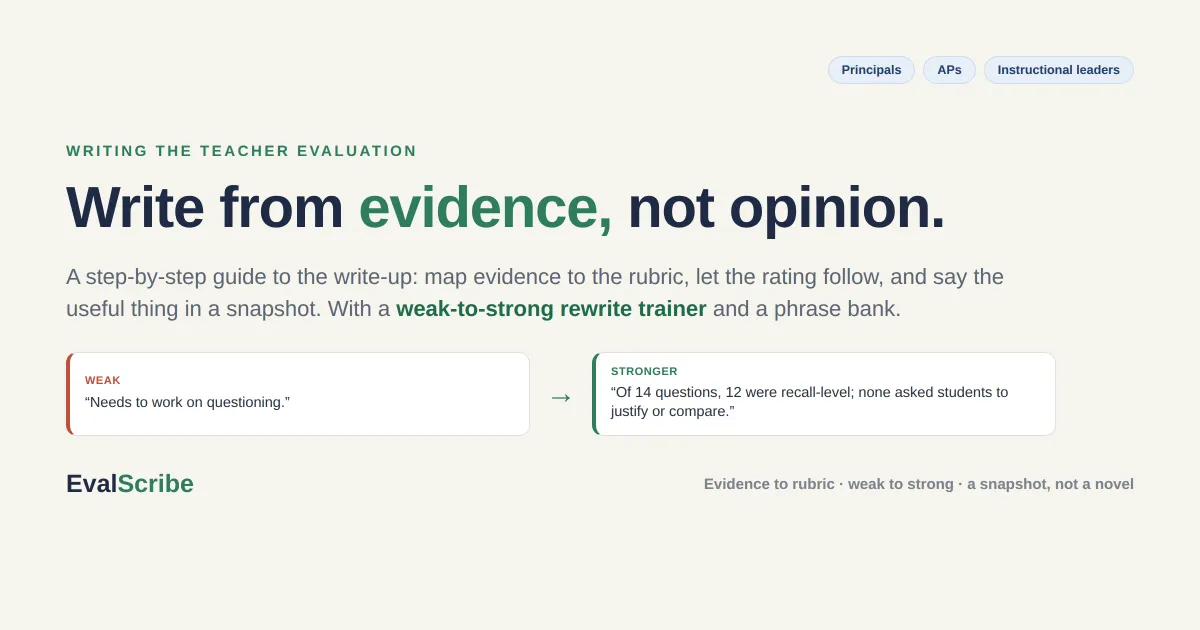
How to Write a Teacher Evaluation: A Step-by-Step Guide (With Examples)
by: Anthony D. Neely, Ph.D.Published on: 12/08/2026A step-by-step guide for principals and APs on writing a teacher evaluation from evidence: map notes to the rubric, let the rating follow, and write feedback teachers can act on. With before-and-after examples, a phrase bank, and a rewrite trainer.
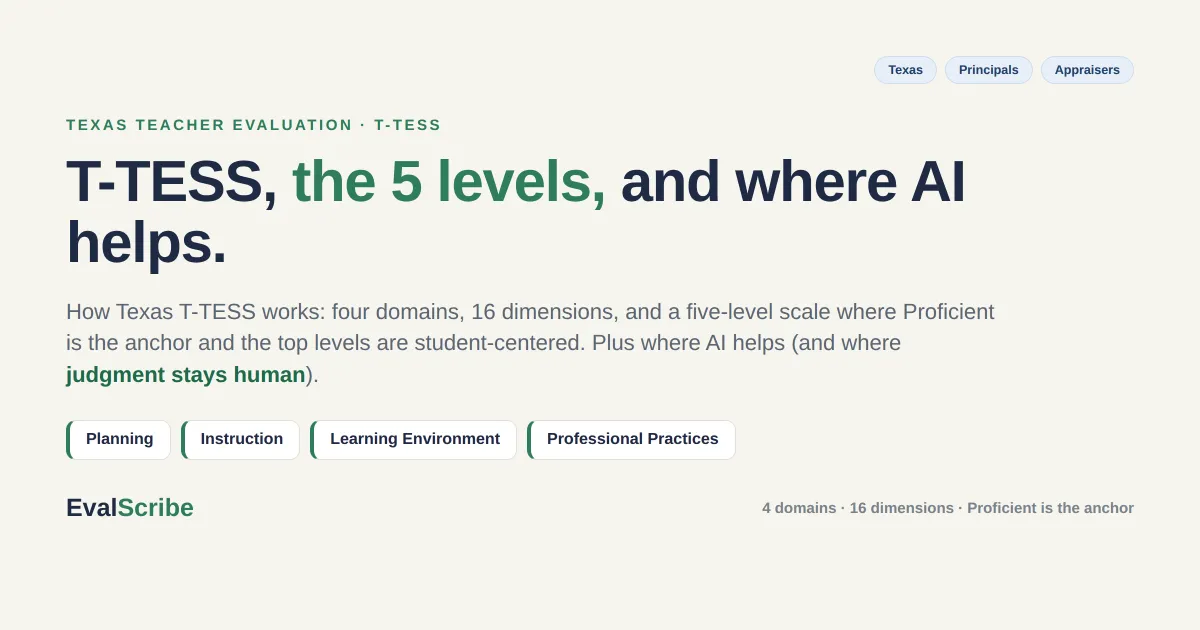
The Texas T-TESS Rubric: 4 Domains, 16 Dimensions
by: Anthony D. Neely, Ph.D.Published on: 02/08/2026Texas T-TESS explained: the 4 domains, 16 dimensions, and 5 performance levels, plus the Alternate Domain I option. A clear guide for Texas appraisers.
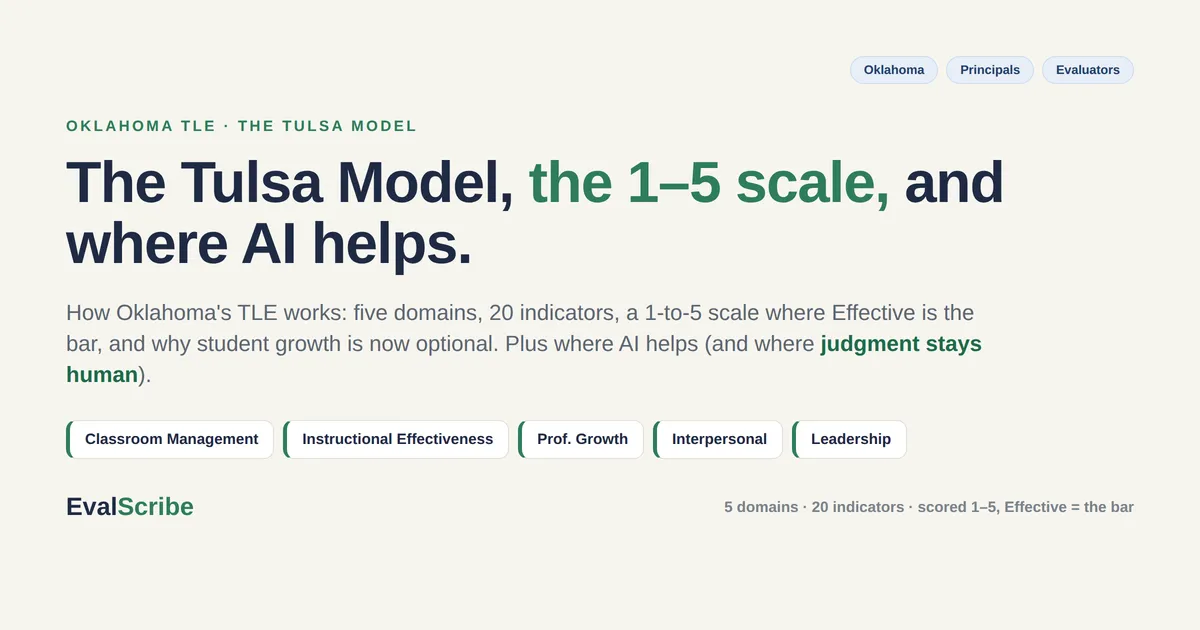
The Tulsa Model and Oklahoma TLE, Explained: Domains, the 5-Point Scale, and Where AI Helps
by: Anthony D. Neely, Ph.D.Published on: 01/08/2026How Oklahoma's TLE and the Tulsa Model work: the five domains and 20 indicators, the 1-to-5 rating scale where Effective is the bar, the observation cycle, and why the quantitative measure is now optional, plus where AI helps with the write-up.